
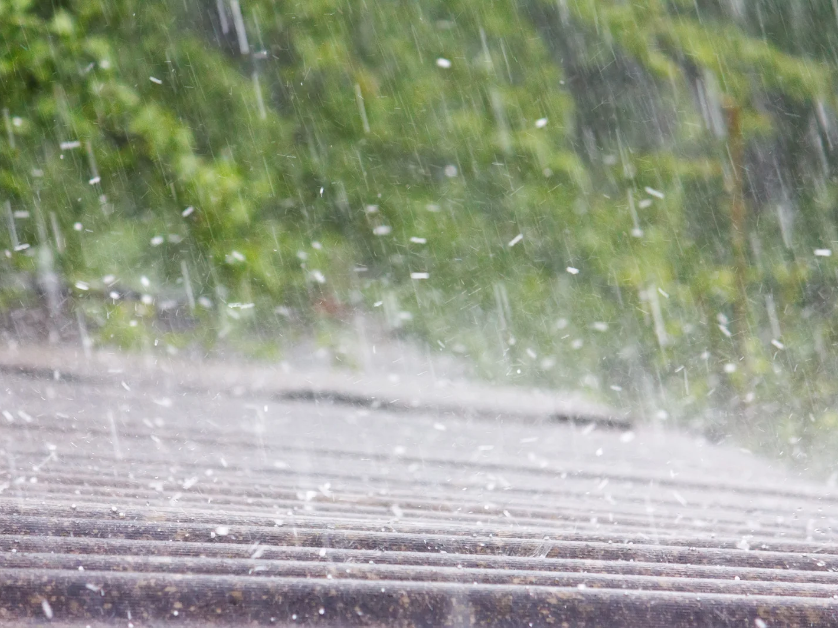
Thursday afternoon, November 12, brought something New Castle County almost never sees in late fall: hail, damaging winds and a tornado confirmed by the National Weather Service. Hail fell around Newark just after 1 p.m., with larger, quarter-sized hail reported just over the line in Elkton and North East, Maryland. Downed trees, toppled signs and broken fences were reported from Stanton and Ogletown to Christiana, and storms moved up the I-95 corridor toward North Wilmington and Claymont.
It’s only the third November tornado recorded in Delaware since 1950, so most homeowners here have never had to think about storm damage to their roof. If you’re in the path of Thursday’s storm, here’s what to look for, what to do next, and how Homecraft® Inc. can help.
How hail and wind damage a roof
Hail doesn’t always leave a hole. More often, it does damage you can’t see from the driveway, and that damage shows up months later as a leak.
- Bruised or cracked shingles. Hail can crack the mat underneath an asphalt shingle even when the surface looks fine. Over time, those weak spots let water in.
- Granule loss. The gritty granules on your shingles protect them from the sun. Hail knocks them loose, which ages your roof faster.
- Dented metal. Gutters, downspouts, vents, flashing and metal roofing often show hail strikes first. Dents on these are a good clue your shingles were hit too.
- Lifted or missing shingles. Strong winds can break the seal that holds shingles down, even if none blew off. An unsealed shingle is much more likely to tear off in the next storm.
- Debris and tree impact. Falling limbs can puncture decking, crack shingles and damage gutters.
The good news: small, pea-sized hail on its own often doesn’t damage a healthy roof. But hail combined with high winds and flying debris, or hail hitting an older roof, is a different story. The only way to know for sure is to have someone look.
What to do right now
1. Stay safe first
Stay clear of downed wires and call Delmarva Power to report them. Watch for broken glass and sagging ceilings inside. Please don’t climb onto your roof, especially when it’s wet or cold. Wet shingles are slippery, and storm damage can make them unstable.
2. Take photos from the ground
Walk around your home and photograph anything that looks damaged: gutters, downspouts, siding, windows, window screens, fences, cars and any shingle pieces in the yard. Write down the date and time of the storm (Thursday, November 12, early afternoon). These photos will help if you file an insurance claim.
3. Check inside, too
Look at your ceilings and the top floor for water spots, and check the attic if you can get up there safely. Look for damp insulation, drips or daylight coming through the roof boards.
4. Stop more damage
If water is getting in, put out buckets, move belongings and cover broken windows. If you can see an opening in the roof, call us for an emergency tarp. Keep receipts for anything you spend on temporary repairs, since many insurance policies cover these costs.
5. Call your insurance company
Let your insurer know about any damage you’ve found. Every policy is different, so check your deductible and any deadline for filing a storm claim. An adjuster will usually come out to look at the damage.
6. Get a professional roof inspection
This is the most important step, and it’s best to do it before the adjuster visits. A roofing pro knows what hail damage looks like up close and can document it, so nothing gets missed.
Why you shouldn’t wait
Hail damage is easy to put off because the roof isn’t leaking yet. But cracked shingles and broken seals let water in slowly, and winter freeze-and-thaw cycles make small cracks bigger. By spring, a simple repair can turn into rotted decking, mold or interior water damage. Waiting can also make an insurance claim harder, since it’s tougher to prove the damage came from this storm. Not sure where your roof stands? Here are the signs you need a new roof.
Watch out for storm chasers
After a big storm, out-of-town contractors often show up knocking on doors. Before you sign anything, make sure the company is local, licensed and insured in Delaware, has reviews you can check, and won’t ask for full payment upfront. Homecraft® Inc. is a family-owned, GAF Master Elite® certified contractor that has served Delaware and southeastern Pennsylvania since 1981. We’ve been here for more than 45 years, and we’ll still be here long after the storm.
Book your roof inspection with Homecraft® Inc.
If you live in Newark, Stanton, Ogletown, Christiana, Bear, Wilmington, Claymont or anywhere else in New Castle County, we’ll come out and check your roof after Thursday’s storm. Our inspection includes:
- A full look at your shingles, flashing, vents, gutters and attic
- Photos of any hail or wind damage we find
- A clear, honest report, even if your roof is fine
- Help working with your insurance adjuster if you file a claim
- Emergency tarping if you have an active leak
Call 302-306-6251 to get on the schedule.
Frequently asked questions
How do I know if hail damaged my roof? Check your gutters, downspouts, vents and car for dents, and look for shingle granules piling up at the bottom of your downspouts. If you see either, your roof was likely hit. A professional inspection is the only way to know for sure.
Can small hail damage a roof? Small hail alone often doesn’t damage a newer roof. But older roofs, or hail paired with strong winds and debris like Thursday’s storm, can cause damage that isn’t visible from the ground.
Will my homeowners insurance cover hail damage? Most homeowners policies cover sudden storm damage from hail and wind, but coverage and deductibles vary. Check your policy or call your agent, and get your roof inspected so you have documentation.
How soon should I get my roof inspected after a hail storm? As soon as you can, ideally within the next week or two and before your insurance adjuster comes out. Hidden damage gets worse with time, especially through winter.
Should I get on my roof to check for damage? No. It’s not safe, and walking on a damaged roof can make things worse. Take photos from the ground and let a professional handle the rest.